Your berth shapes the season more than your hull does. Below are the 2026 berth counts, published length limits and price bands for seven marinas owners actually use, then the six checks that separate a marina that suits your yacht from one that only photographs well. Book peak Mediterranean berths six to twelve months out, and event weeks twelve to eighteen months out. That is the whole scheduling problem in one line.
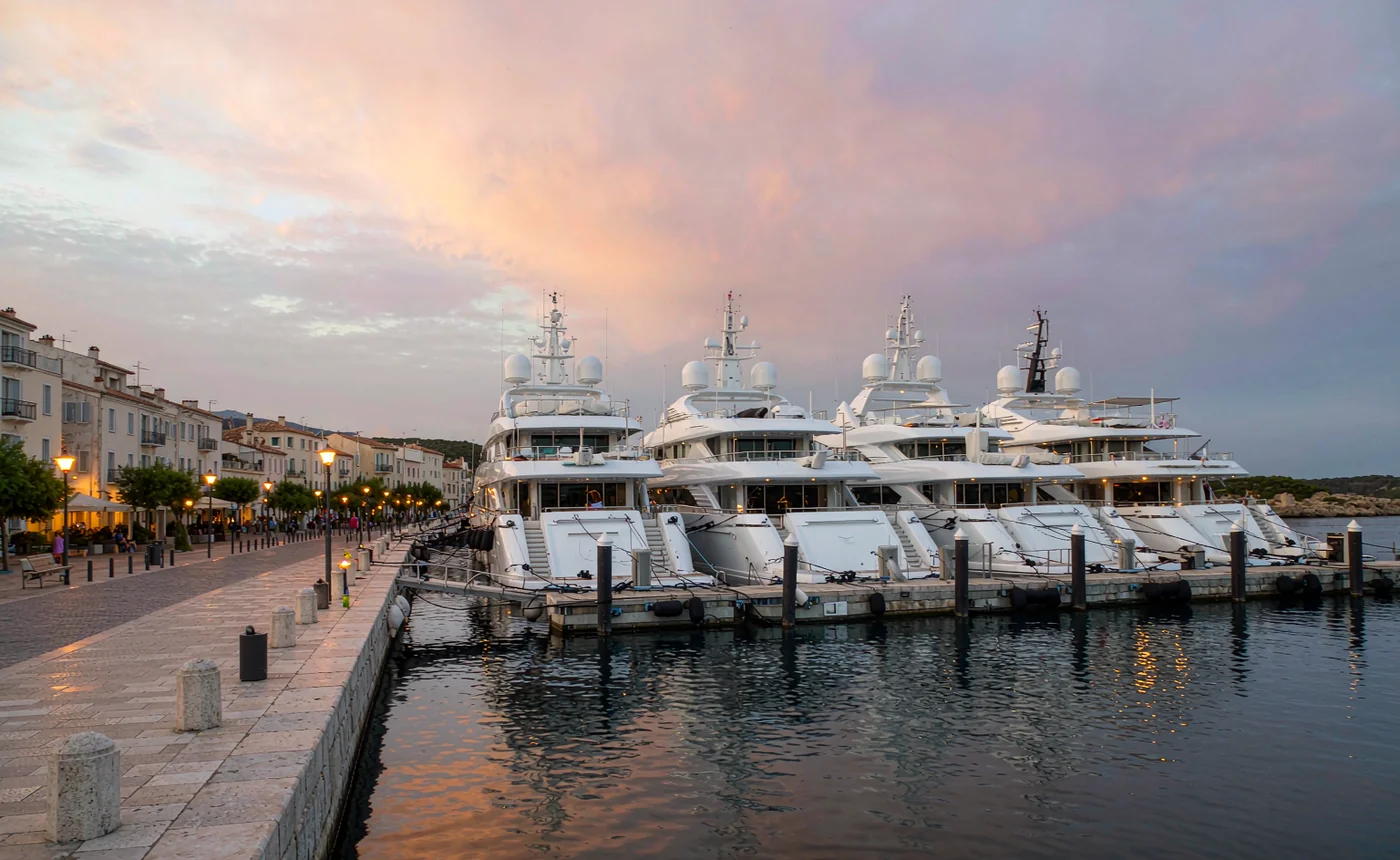
What a night in a top marina costs in 2026
| Marina | Region | Berths | Published max LOA | What the rate looks like |
|---|---|---|---|---|
| Port Hercule, Monaco | Mediterranean | 760 | 130 m | Event weeks triple the normal tariff; Grand Prix and Yacht Show berths go 12+ months ahead |
| Marina di Porto Cervo, Sardinia | Mediterranean | About 700, of which roughly 100 for superyachts | 120 m | Published berthing of about €300–5,000 per night, set by length and position |
| Puerto Banús, Marbella | Mediterranean | 915 | About 50 m | Ranked Europe's most expensive per day by Engel & Völkers: about €4,289 for a 55 m berth in peak season |
| Marina Cap Cana, Dominican Republic | Caribbean | About 122–150 | About 45 m | Transient from about $2.50 per foot per day; monthly contracts cut that sharply |
| Yacht Haven Grande, St Thomas | Caribbean | 46 | 200 m | Megayacht slips only; winter (December–April) is the peak and fills first |
| Dubai Harbour, UAE | Middle East | About 700 | 160 m | Annual berths roughly AED 800–1,500 per metre per year |
| ONE°15 Sentosa Cove, Singapore | Asia-Pacific | 270 wet plus 60 dry | About 67 m | Non-member rate about $8.18 per foot per day at 101–120 ft, 9% GST included |
Read the fourth column carefully. A published maximum is a directory figure, not a promise about your berth. Port Hercule is listed to 130 m while its 2026 tariff schedule runs to 219.99 m, and neither number tells you whether a slot of your beam and draft is free in August. Always ask for the specific berth, not the marina's headline length.
The rate columns are equally blunt. Porto Cervo's €300–5,000 range and Dubai's annual figures are published tariffs; everything else in the market is a quote. Treat any number you are given as a starting point for a negotiation, and remember that marina fees sit inside a much larger ownership budget — see what a yacht really costs to run before you sign an annual contract.
Monaco and Sardinia: the top of the Mediterranean band
Port Hercule is the Principality's large-yacht harbour and carries the bulk of Monaco's superyacht traffic at 760 berths. Two windows drive the whole year: the Grand Prix in late May and the Monaco Yacht Show in late September. Both book twelve to eighteen months ahead and both roughly triple the normal tariff. Monaco Ports also operates Port de Fontvieille inside the Principality and Cala del Forte in Ventimiglia, about 7.9 nautical miles away, which is where owners go when the main basin is full.
Marina di Porto Cervo is the Mediterranean's sailing address rather than its social one. It holds about 700 berths, around 100 of them sized for superyachts, with a published maximum of 120 m. The New Marina runs year-round; the Old Port opens from June to September. The Yacht Club Costa Smeralda hosts the Maxi Yacht Rolex Cup each September, which is worth knowing before you plan a quiet week in the Gulf of Arzachena.
Puerto Banús is the outlier on price. With 915 berths, drafts of 3–6 m inside the basin and 7.5 m at the entrance, it is the busiest luxury harbour in southern Spain, and Engel & Völkers' annual ranking puts its peak daily rate for a 55 m berth above Monaco and Porto Cervo. Its real operational advantage is position: Gibraltar is 65 km west, which is where most Marbella-based owners bunker and provision.
Caribbean winter: capacity, not glamour, is the constraint
Yacht Haven Grande in St Thomas is the Caribbean benchmark for large yachts. It publishes 46 megayacht slips, a 200 m maximum length and a 7.6 m maximum draft, holds 5 Gold Anchor Platinum accreditation, and has been named Superyacht Marina of the Year four times. On-site customs and immigration clearance matters more than the awards do: it removes a separate stop from every arrival from outside the US Virgin Islands.
Marina Cap Cana, on the Dominican Republic's east coast, is built as an inland basin rather than an open harbour, which is why it markets itself as a hurricane refuge. Sources put it at roughly 122 to 150 slips with vessels up to about 150 ft (45 m), and transient berthing from about $2.50 per foot per day. Its sportfishing grounds and the Punta Cana airport are the practical draws.
If you want the southern Caribbean instead, Port Louis Marina in Grenada publishes 227 berths with capacity to about 105 m, and stays useful outside the crowded northern island circuit. Whichever island you choose, the berth is the item that has to be fixed before guest flights — not after. For owners running a paid programme, that sequencing is the same one covered in our charter guide.
Dubai and Singapore: newer circuits, lower rates
Dubai Harbour takes about 700 berths up to 160 m with no air-draft limit at all, and has held 5 Gold Anchor, Superyacht Ready and Clean Marina accreditation since January 2024. Its season runs October to April; from May the air temperature passes 45°C and the sea reaches around 35°C. Annual berths are roughly AED 800–1,500 per metre per year, which is typically 30–50% below comparable Mediterranean rates.
ONE°15 Marina Sentosa Cove is the Asian base most owners actually use. It lists 270 wet berths including about 32 megayacht berths, 60 dry berths, a published maximum of about 220 ft (67 m) and a maximum draft of 4.5 m, built to Platinum Gold Anchor and Superyacht Ready standards. It is the only private marina in Singapore with its own customs, immigration and quarantine facility, which is the operational reason to start a Southeast Asia season there rather than in Phuket. Non-member berthing is published at about $8.18 per foot per day for a 101–120 ft vessel, with a 35 ft minimum charge.
How to choose a marina for your yacht, not for the brochure
Work these six checks in order. The first two eliminate most marinas before price becomes relevant.
- Draft at lowest astronomical tide. Ask for the minimum depth in your specific berth, not the approach channel, and check it against your loaded draft with a margin.
- Beam and berth geometry. A marina advertising 160 m may have two slots your width can enter comfortably, and stern-to mooring with a lazy line changes the calculation entirely.
- Shore power, honestly specified. Amperage, number of phases and 50 Hz versus 60 Hz. If your yacht runs 400A and the berth offers 63A, you are running generators at night.
- Security and access control. ISPS-compliant procedures, controlled pontoons, and a night watch are the difference between a marina and a car park.
- Crew facilities and provisioning. Crew lounge, laundry, gym, and a supermarket within walking distance. Crew turnover costs more than a slightly higher berth fee — the numbers are in our crew hiring guide.
- Airport transfer and technical support. Guest transfers, and whether a travel lift and a yard that knows your systems are on site or two ports away.
When two candidates tie, rank your own priorities rather than the marina's marketing. An owner who uses the yacht four weeks a year should weight the airport and the provisioning; an owner living aboard should weight shore power, security and crew support.
Booking a berth: timing, agents and contracts
Mediterranean peak berths are released and taken six to twelve months ahead, and event berths further out still. Outside July and August, a two to four week request is usually enough in the western Mediterranean, and June and September cost materially less than the peak weeks for weather that is often better.
Yacht agents earn their fee on access. They hold berths that never appear on public booking systems and handle clearance, provisioning and crew logistics at the same time; expect a per-port-call charge that scales with vessel size. For any stay longer than a few weeks, compare the annual contract against the monthly rate before committing. At ONE°15 Sentosa Cove's published tariff, the yearly rate is around 15–25% below the monthly rate for the same berth size — a gap worth asking every other marina to match.
Two habits prevent most berthing surprises: confirm your berth in writing with the exact dimensions and power supply, and keep a fallback marina identified before you need it. In the Mediterranean that fallback is often a nearby second basin; in the Caribbean it is often a different island entirely. Where you keep the yacht also sets how far you cruise, which is what our Mediterranean destination guide works through route by route.
Frequently asked questions
How far ahead should I book a Mediterranean berth? Six to twelve months for July and August, twelve to eighteen months for event weeks such as the Monaco Grand Prix or the Monaco Yacht Show. Outside those windows, two to four weeks is often enough in the western Mediterranean.
Which marinas can take a yacht over 100 metres? In the Mediterranean, Port Hercule is listed to 130 m and Marina di Porto Cervo to 120 m. Further afield, Yacht Haven Grande is listed to 200 m and Dubai Harbour to 160 m with no air-draft limit.
Is anchoring cheaper than taking a berth? On paper yes, in practice rarely for a crewed yacht over about 24 m. You still need tender runs for guests and crew, shore power for air conditioning, and an anchorage that holds in the prevailing swell — and in Monaco or Porto Cervo the anchorages are exposed in a Mistral.
What does a 30-metre berth cost per month in the Mediterranean? High-season monthly rates at a top western Mediterranean marina such as Puerto Banús run roughly €8,000–12,000 for a 30-metre yacht, with winter rates from November to March typically 40–60% lower.
Decide the region first, then the marina. Region locks in the cruising grounds, the season and the airport; once that is settled, the berth itself is a checklist and a booking date, and the only decision left is what you are willing to pay for a position you can keep.