Buying a superyacht — anything from 24 metres (79 feet) up — follows the same six stages whether the boat costs €8 million or €80 million: shortlist, offer with a 10% deposit into escrow, survey and sea trial, closing, flag and VAT registration, then handover. A clean brokerage deal takes four to twelve weeks from accepted offer to keys in hand. This guide walks through each stage, what it costs, and the two places where buyers lose the most money.
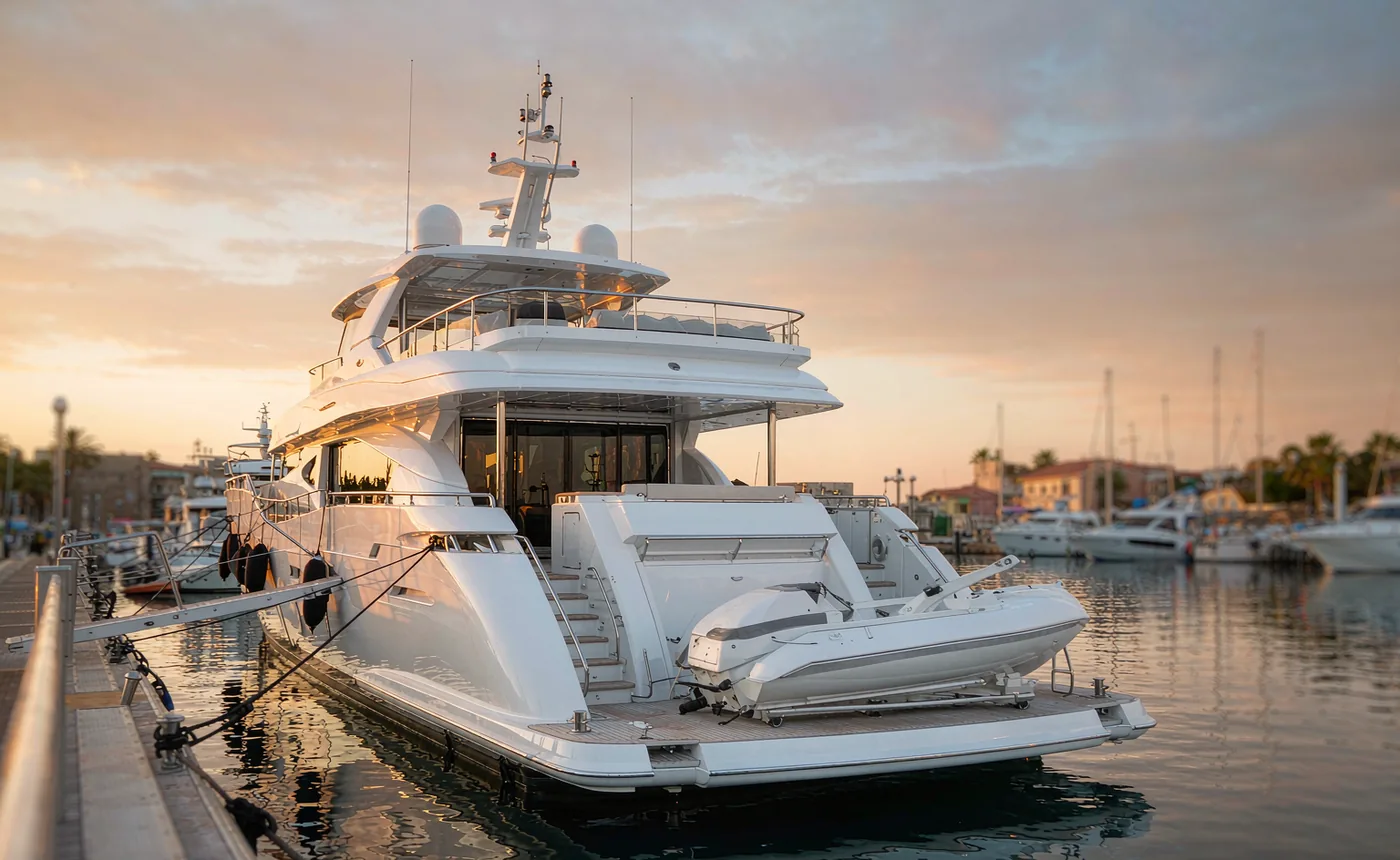
What counts as a superyacht — and why the 24-metre line matters
The industry convention is simple: a superyacht is a yacht over 24 metres (79 feet) long overall. That number is not marketing. It is the length above which most classification societies, insurers and flag states treat the vessel differently, and it changes what the purchase process looks like.
Above 24 metres, the yacht is normally built and maintained to class — Lloyd's Register, DNV, ABS or RINA are the societies you will see most often — and if she is chartered commercially, she must comply with a large-yacht code such as the MCA Large Yacht Code (LY3) or an equivalent, with commercially certified crew. Even a privately used 24-metre-plus yacht faces higher insurance premiums, marina fees charged per metre per night, and a survey scope that goes well beyond the hull-and-engine check a 15-metre boat needs.
The practical consequence for a buyer: a 23.9-metre yacht and a 24.1-metre yacht can carry materially different annual operating costs and different paperwork, even when they look almost identical side by side. Before you make an offer, know which side of the line you are on.
The six stages of a superyacht purchase, in order
Most brokerage deals in 2026 still run on the same sequence brokers have used for decades, usually under a MYBA-style memorandum of agreement. The stages, and what happens in each:
- Shortlist and market search. Expect four to twelve weeks of viewing before you commit. A buyer's broker filters central agency listings, checks asking prices against recent comparable sales, and arranges viewings. Start from the price band, not the brand: the difference between an €8 million and a €12 million budget decides which yards and years are even in play.
- Offer and purchase agreement. Your offer states the price, the inventory that stays aboard, and the conditions — survey, sea trial, and often sea-trial performance figures. Once accepted, you pay a 10% deposit to a designated escrow stakeholder. The money does not go to the seller at this point.
- Survey and sea trial. The agreement sets a window, commonly seven to fourteen days, for haul-out and an under-load sea trial. You appoint the surveyor yourself. This is where most deals are renegotiated or walked away from.
- Closing. The balance is paid against documents: a bill of sale, transfer of registry, and confirmation that any mortgage on the yacht has been discharged. Closing is a paperwork exercise if the survey went well — it should feel anticlimactic.
- Flag registration, VAT and ownership structure. The yacht must be registered before she moves under her own power on a commercial itinerary. This is also when import VAT or temporary admission is settled if the yacht will spend time in EU waters.
- Handover and delivery. Crew onboarding, provisioning, and the delivery voyage to her home port. If the delivery crosses an ocean, it needs its own planning, insurance rider and a crew that has actually done the passage.
What the process actually costs you
The asking price is not the number to plan around. These are the transaction costs on top of it, using ranges commonly quoted in the 2026 brokerage market:
| Stage | What you pay for | Typical range |
|---|---|---|
| Offer accepted | Deposit held by the escrow stakeholder | 10% of the agreed price |
| Survey & sea trial | Independent surveyor, haul-out, dive inspection, specialist reports | roughly $20,000–60,000 on a 40 m+ yacht, varies by yard and scope |
| Legal & escrow | Maritime lawyer reviewing the agreement, escrow fees | roughly $10,000–30,000 |
| Brokerage | Commission — usually already built into the asking price and split between the two brokers | typically 10% of price in total |
| Flag registration | First registration, tonnage measurement, radio licences | roughly $5,000–20,000 in the first year |
| Delivery | Delivery crew, fuel, provisioning, insurance rider | varies with distance; an ocean repositioning runs to tens of thousands |
| First-year running | Crew, insurance, marina, maintenance, fuel | often quoted at 8–12% of the purchase price per year |
Two of these lines deserve a second look. The survey line looks expensive until you compare it with the price of a hull defect found after closing. And the running-cost line is the one that ends ownership dreams: a yacht bought at €10 million should be budgeted at roughly €800,000–1.2 million a year to run, before any refit.
Survey and sea trial: what to insist on
Appoint your own surveyor — not one suggested by the seller or the selling broker. A full pre-purchase survey on a superyacht is a team exercise: the lead surveyor, an engineer for the machinery space, and often an electronics specialist. If the yacht is GRP, expect moisture readings and percussion sounding; on steel or aluminium, ultrasound hull-thickness measurements. Oil samples from engines and gearboxes cost little and tell you a great deal. If the yacht carries a class certificate, the surveyor will also check that class records match what is physically aboard.
The sea trial should run the yacht under load for at least two hours, exercise the generators at working load, and test the stabilisers, bow thruster and every item listed in the inventory. A trial that never leaves idle speed is not a sea trial; it is a river cruise with paperwork.
Three red flags that justify walking away: the seller limits survey time, refuses a haul-out, or insists on their own surveyor. Any one of these costs you far less to walk away from than to accept. Our yacht survey guide covers the scope and typical costs in detail.
Flag, VAT and ownership structure
Where you flag the yacht determines where you may cruise, how she is inspected, and how she is taxed. Malta, the Cayman Islands, the Marshall Islands, the Isle of Man and Jersey are the registries that come up most often. The right answer depends on two questions: where will the yacht actually be based, and will she earn charter income?
In the EU, the key distinction is VAT paid versus temporary admission. A yacht with documented VAT-paid status can move freely within the EU. A yacht owned outside the EU can usually stay in EU waters under temporary admission for up to 18 months, with extensions granted only in exceptional cases, without paying import VAT — but she cannot be freely sold or chartered to EU residents while under that regime. Import VAT rates across member states run roughly 18–25%, with Malta at the low end and Italy at 22%.
Most superyachts are held through an owning company, typically in Malta, the Isle of Man or Jersey. The structure matters for liability, for VAT, and eventually for resale. This is not a DIY area: a maritime lawyer and a tax adviser should review the structure before closing, not after. Both our flag registration guide and our yacht tax planning guide go deeper on the options.
Brokerage purchase or new build?
| Brokerage (used) | New build | |
|---|---|---|
| Time to ownership | 4–12 weeks after offer accepted | roughly 2–4 years for a custom 40 m+ |
| Price certainty | Fixed at closing | Subject to build-stage variations and extras |
| Survey's role | Central — drives negotiation | Owner's site team plus class surveys during build |
| VAT status | Verify VAT-paid evidence before closing | Settled at first import |
| Best suited to | Buyers who want to cruise this season | Buyers with a specific layout in mind and patience |
A used yacht from a well-maintained programme is usually the better financial decision: someone else absorbed the steepest depreciation. A new build makes sense when the layout you want does not exist on the market, or when you plan to hold the yacht long enough for the specification to matter.
Frequently asked questions
How long does the superyacht purchase process take? A straightforward brokerage purchase closes four to twelve weeks after the offer is accepted, with survey and sea trial usually in weeks two and three. A new build takes roughly two to four years from contract to delivery for a custom yacht over 40 metres.
Is the 10% deposit refundable if the survey goes badly? Normally yes. The deposit sits with the escrow stakeholder, and a well-drafted agreement refunds it if the survey reveals defects outside the contract's tolerances — as long as you notify within the stated window, which is usually counted in days.
Do I have to register the yacht before I can use her? You cannot legally operate an unregistered yacht. The registry you choose depends on where you will cruise and whether you plan to charter.
Can I charter her to offset the running costs? Yes, but chartering moves the yacht into commercial operation, which brings large-yacht code compliance, commercially certified crew and charter VAT rules. Charter income commonly offsets part of the running costs; it rarely covers all of them. Our yacht charter guide covers what chartering involves from the owner's side.
If you take one action away from this guide, make it this: appoint your surveyor and your maritime lawyer before you sign the offer, not after. Together they cost well under 1% of the purchase price, and they are the two levers that decide whether you overpay. The rest of what goes wrong — and how to avoid it — is in our guide to the ten most costly buying mistakes.