If your pre-filter is loading up in hours instead of months, the bowl holds a black or coffee-ground sludge, or the filler cap smells rotten, you have diesel bug — a microbial colony living at the fuel-water interface. It will not fix itself, and the cost climbs steeply once dead biomass and acidic by-products reach the injection system. Catch it at the filter and it is an additive and a few elements; catch it at the injectors and it is a yard bill. This guide covers what the contamination actually is, how to confirm it, how to treat it according to severity, and the routine that keeps it from returning.
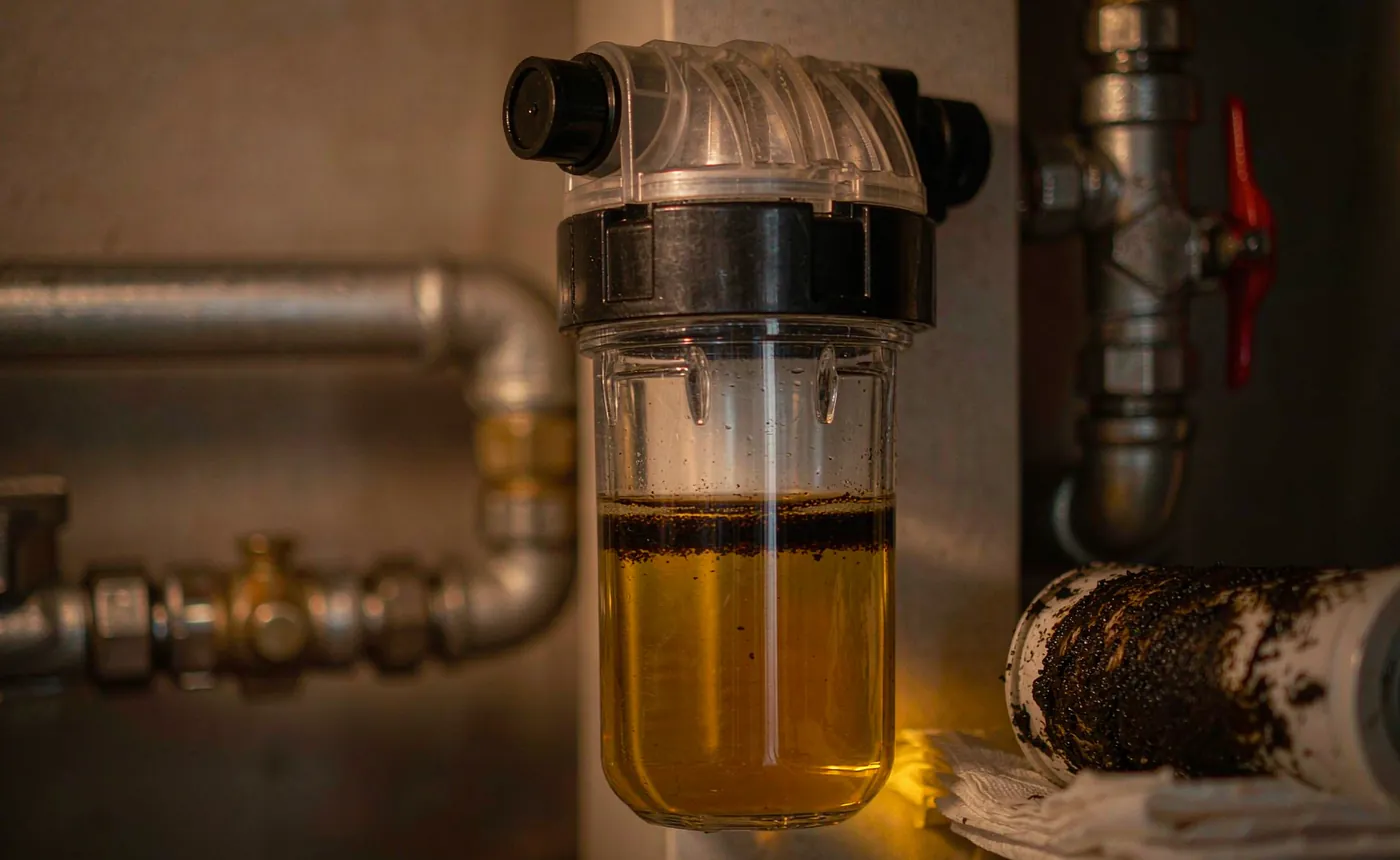
What diesel bug actually is
It is not one organism. The sludge in a contaminated tank is a community of bacteria, yeasts and moulds that live in the thin layer where diesel meets water. They feed on the hydrocarbon and on the additives in the fuel, and they produce biomass, organic acids and, in anaerobic conditions, hydrogen sulphide — the sulphur smell that gives a bad tank away. The acids attack tank walls and injector internals; the biomass blocks filters; the spores travel through the whole system once the colony is established.
Water is the enabling condition, not the fuel itself. It arrives as condensation in a half-empty tank, through a worn deck-fill O-ring, through the vent in humid air, or in the bunker itself. A tank that is kept full has far less breathing room for condensation, which is why the old advice to fill up before lay-up still holds.
Blended fuel raises the risk. ISO 8217:2017 allows up to 7% v/v FAME in the distillate grades DFA, DFZ and DFB, and FAME is hygroscopic — it pulls water out of the air and holds it in the fuel rather than letting it settle. CIMAC's guidance for owners using distillates with up to 7% FAME recommends keeping storage under six months and, beyond that, sampling and analysing the fuel every three months. If your marina sells B7 and the boat sits for a season, you are squarely in that group.
Five symptoms, in the order they tend to appear
The earlier you read the signal, the cheaper the fix. These are the stages most owners see, though a boat that has just taken on a bad bunker can skip straight to the third.
| Symptom | What you actually see | What it means | First move |
|---|---|---|---|
| 1. Rising pre-filter restriction | Differential pressure climbing, or elements lasting weeks instead of months | Biomass is loading the element | Inspect the bowl, order spare elements |
| 2. Sludge in the bowl | Coffee grounds, black paste or grey slime when you drain the pre-filter | Established colony | Drain, take a sample, shock-dose |
| 3. Scum line in the tank | A dark ring at the water-fuel interface on a dip stick | The colony itself, not just its debris | Plan polishing or a tank clean |
| 4. Rotten smell at the filler | Sulphurous, "something died" smell instead of clean diesel | Anaerobic activity, hydrogen sulphide | Do not run; sample first |
| 5. Engine symptoms | Hard starting, misfire, power loss, white or black smoke | Contamination has reached the engine | Stop, change filters, lab test |
Step five is the expensive one. White smoke that persists for minutes points to water reaching the injectors; black smoke at start-up points to fouled injector tips. Either way, the fuel system needs professional attention rather than another filter change.
Confirm it before you spend money
Two checks separate diesel bug from ordinary dirt. The first is a field test: drain about a litre from the lowest point of the tank into a clean glass jar and hold it to the light. Clean diesel is clear amber; contaminated fuel is hazy, darker than it should be, or carries visible particles. A water-finding paste on a dip stick tells you how deep the water layer is, and a clean rod dragged along the bottom will come up cloudy with biomass if the colony is there.
The second is a laboratory test. ASTM D6469 is the standard guide for microbial contamination in fuels, and most marine engineering services in Mediterranean ports will take a sample and return results in 24–48 hours. Ask for bacterial and yeast/mould counts plus water content, not just a pass/fail. The numbers tell you whether you are treating a light infection or planning a tank clean.
Treat according to severity, not according to hope
- Light contamination — water, no visible sludge. Drain the water from the trap and tank sump, change the element, then shock-dose with a biocide at the label's treatment rate rather than the maintenance rate. Run the engine under load for an hour or two, then inspect the bowl again. Expect one or two more element changes as dead biomass works through.
- Moderate — visible sludge, filters clogging repeatedly. Shock-dose, then polish the fuel through a 1–3 micron filter with a water-separation stage, circulating the tank contents several times. Portable polishing units can be hired for roughly $500–800 a week in Europe; buying a unit runs about $3,000–6,000 and rarely pays off below 60 ft.
- Severe — black mat on the tank walls. Polishing alone will not fix this, because it cleans the fuel and not the tank. Drain the tank, open the inspection hatch, clean the interior mechanically, flush the lines and replace the elements. A yard tank clean typically runs $2,000–5,000 depending on size and access.
- Contamination that reached the injectors. Injector service is commonly $300–600 per injector, and a full fuel-system clean $1,500–3,000. This is the number that makes the earlier options look cheap.
| Option | Typical 2026 cost | What it removes | When it is the right call |
|---|---|---|---|
| Biocide, shock dose | Tens of dollars | Live colony only | Light contamination, caught early |
| Polishing (hire or yard) | ~$500–800/week hire | Water, silt, dead biomass | Visible sludge, recurring clogs |
| Tank clean | ~$2,000–5,000 | Sludge on walls, corrosion check | Heavy mat, unknown fuel history |
| Injector / pump service | ~$300–600 per injector | Damage already done | Rough running, smoke, power loss |
Treat those figures as planning numbers, not quotes. Yard rates move with access, tank size and waste disposal, and a tank with two inspection hatches is a different job from one with none.
Choosing a biocide that works on both sides of the interface
The colony lives at the boundary, so the product has to reach both the fuel and the water phase. MBO — 3,3′-methylenebis(5-methyloxazolidine), the active in Grotamar 82 — partitions into both, which is why it dominates the European marine market. CIT/MIT-based products, common in heating oil, sit mainly in the water phase and leave fuel-side biomass alive. Morpholine products work but carry stricter handling requirements.
Check compatibility before dosing: most European pump diesel is B0 to B7, but marina bunkers can run higher, and a product approved for diesel is not automatically approved for B20 or B100. Follow the label rate exactly — under-dosing selects for resistant organisms, and over-dosing wastes money without killing faster.
Prevention is a routine, not a product
- Buy from busy docks. Fuel that has been sitting in a low-turnover marina tank for months is more likely to arrive contaminated.
- Keep tanks full for lay-up. A full tank has little air to breathe, so far less condensation forms on the walls.
- Drain the water trap weekly and after every bunkering. Thirty seconds with the drain valve is the cheapest inspection you will ever do.
- Fit a moisture barrier breather. A silica-gel cartridge costs roughly $25–40 and needs changing about every six months in salt air.
- Run a maintenance dose of biocide at every fill. A few dollars per bunker, and it stops colonies establishing in the first place.
- Sample annually, and inspect the tank every 12 months in warm climates. Cold-water boats can stretch to 18–24 months. If the fuel has been in there more than six months, sample at three-month intervals.
This is the unglamorous part of engine maintenance, and it is also the part that decides whether your season ends at a fuel dock or in a yard. Owners who never have a problem are not lucky; they drain the trap and dose the fuel.
What it costs to ignore
A contaminated tank rarely fails at a convenient moment. Filters clog under load, typically on a passage or against a tide, and the first symptom is loss of power at the worst possible time. Beyond the immediate breakdown, the acids pitting the tank and the biomass coating the injectors show up in a pre-purchase survey as an expensive finding, and a buyer will discount for it. The arithmetic is simple: a few hundred dollars of polishing and a biocide habit against a four-figure injector bill and a shortened engine life.
If the boat is going into winter storage, pair this with the winterisation checklist and treat the fuel before lay-up rather than after. For the wider maintenance sequence, see the annual maintenance checklist; if the engine is already running badly, work through the diesel troubleshooting guide before assuming the worst. And if fuel consumption has climbed without an obvious cause, fouling and contaminated fuel are both worth ruling out — the fuel efficiency guide shows what each one costs you per season.
Frequently asked questions
Can I just add biocide and keep running? You can run, but expect clogged filters for several weeks as the dead colony breaks loose. Carry spare elements, check the bowl often, and do not start a long passage until the fuel runs clear.
How do I know it is diesel bug and not dirt? Dirt is gritty and settles hard; diesel bug is slimy, smells sulphurous, and reappears at the water line. A lab test to ASTM D6469 settles it in two days.
Does biodiesel make it worse? Blends can, because FAME holds water. ISO 8217:2017 permits up to 7% FAME in DFA/DFZ/DFB grades; keep storage under six months and sample quarterly beyond that.
Will polishing fix a badly sludged tank? No. Polishing cleans the fuel; the sludge on the walls needs a tank clean through an inspection hatch.