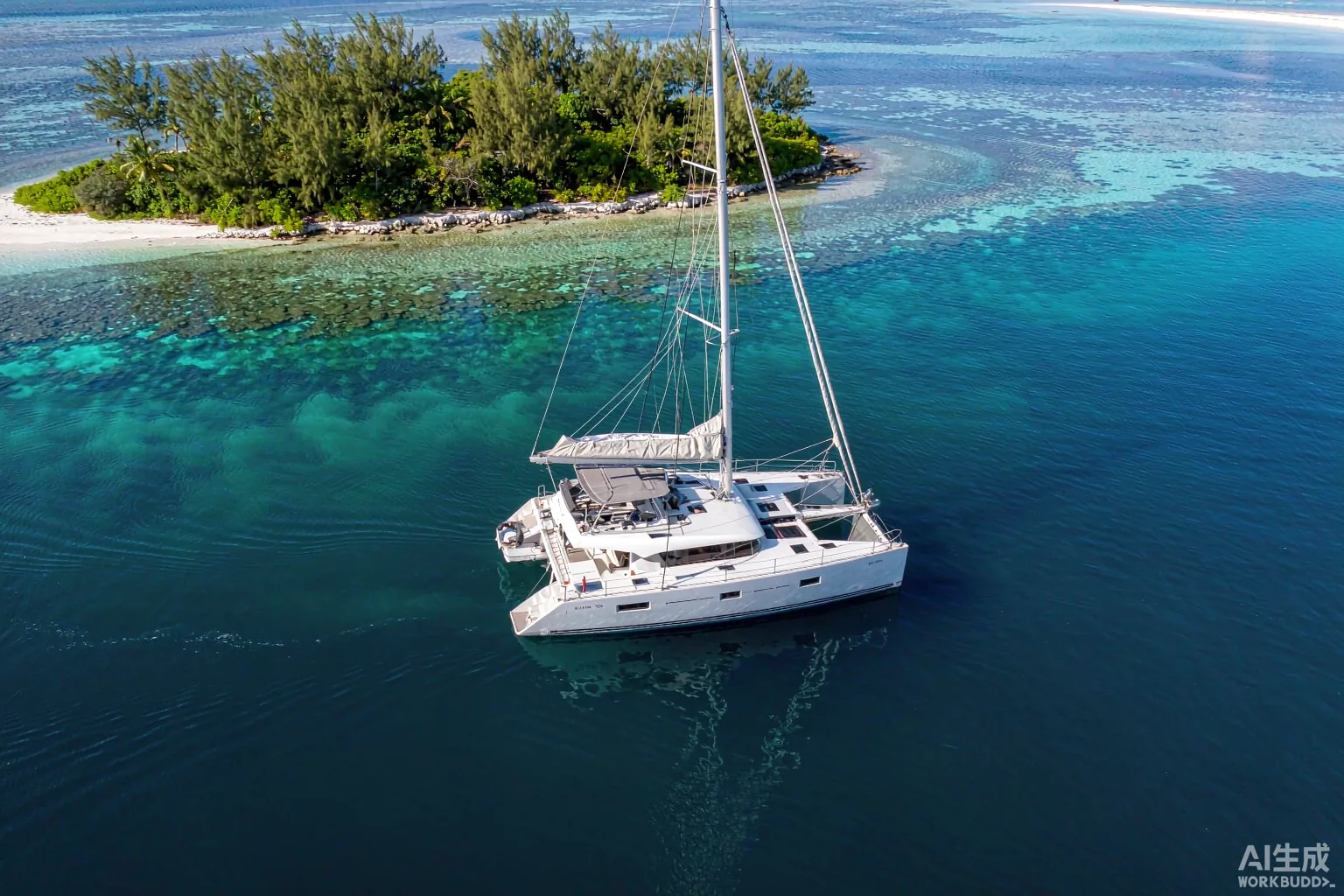
Why catamarans feel so much bigger
The beam of a catamaran is enormous by monohull standards, and that width translates directly into accommodation. A 45 ft catamaran typically offers three or four double cabins with en-suite heads, a saloon the full width of the boat, and a cockpit that flows into it with no steps or compromise.
The second hull is also where the catamaran's practical advantages concentrate: separate machinery space, more stowage, and far better access for maintenance than a monohull's cramped engine bay.
How they sail and how they motor
Modern cruising catamarans sail well downwind and on a reach, and poorly upwind compared with a fin-keel monohull — they need more apparent wind and make more leeway. In a short, steep chop they can also pitch uncomfortably because of their bridge-deck clearance and light displacement.
Under power, two engines and wide-set propellers make a catamaran exceptionally manoeuvrable. Twin-engine docking and the ability to pivot in place are genuinely useful, and a catamaran can often be handled by a couple without drama.
Shallow draught changes what you can do
A draught of around a metre opens anchorages, lagoons and shallow channels that monohulls must skip. For tropical cruising this is transformative: you anchor closer to the beach, run further up rivers, and worry far less about uncharted coral heads.
The trade-off is windage. A catamaran at anchor or in a marina catches a great deal of wind on its bridge deck and superstructure, so anchoring technique and marina handling deserve attention.
Costs, berthing and the real-world drawbacks
Purchase price for a comparable length is usually higher for a catamaran, and so is berthing, since marinas charge by beam. Haul-out and travel-lift capacity for wide beam may also be limited in some yards, which is worth checking before you commit.
- Two engines, two saildrives or outboards, and duplicated systems mean duplicated servicing.
- Wide beam limits marina availability in the Mediterranean in peak season especially.
- Trampolines, daggerboards or mini-keels need their own inspection routines.
- Resale of well-maintained, well-known cruising catamarans is generally strong, particularly for charter-friendly layouts.
Power catamarans: a growing option
Power catamarans bring the same volume and stability advantages to motor cruising, with lower planing speeds but excellent fuel efficiency per passenger and a very comfortable ride. They suit coastal and island cruising where range rather than top speed is the priority.
For families and charter operators, the combination of shallow draught, level platform, huge deck space and economical running has made the power catamaran one of the fastest-growing segments in the market.
What to inspect before buying a catamaran
Catamarans have their own survey priorities, and a surveyor who works mainly on monohulls will miss them. Bridge-deck clearance and slamming history matter enormously: a cat that has been driven hard into a head sea can develop structural fatigue around the bridge deck and forward crossbeam, and repairs there are major work.
Check the daggerboards or mini-keels and their trunks for cracks and grounding damage, inspect both saildrive or outboard installations separately, and ask directly about the boat's loaded displacement. Catamarans are far more sensitive to overload than monohulls — a cruising cat loaded with water toys, spares and provisions can lose a surprising amount of performance and freeboard.
Finally, look at the trampoline attachment points, the chainplates if fitted, and every through-hull in both hulls. Duplicated systems mean duplicated opportunities for a failed seacock, and access in a hull is usually excellent — so there is no excuse for skipping the inspection.