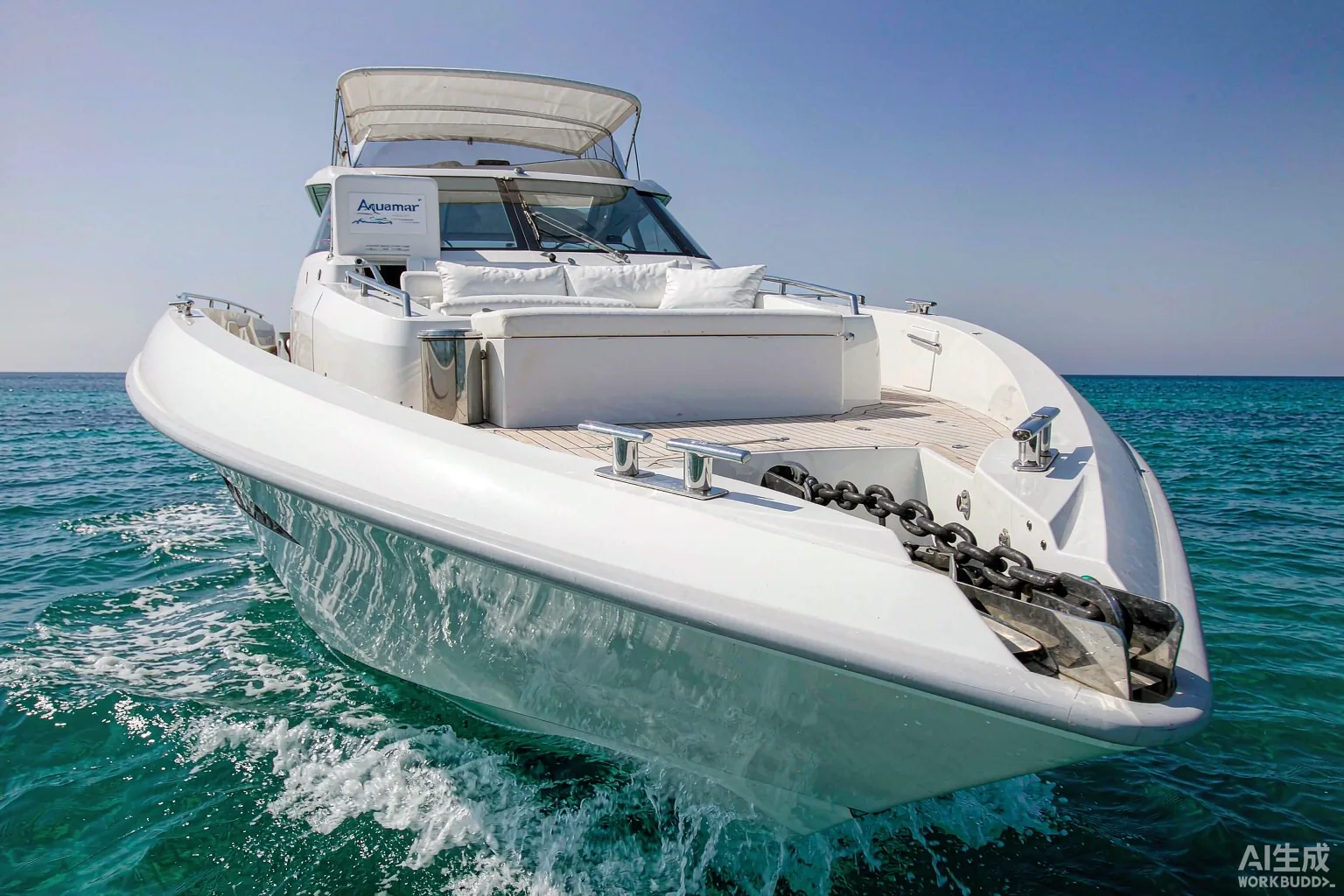
The main types of motor yacht
Motor yachts are usually grouped by hull behaviour and intended use rather than by size alone. Getting this classification right early prevents the most common buying mistake: choosing a fast planing hull for slow coastal cruising, or a heavy displacement hull for weekend sprints.
- Express cruisers — open cockpit, low profile, planing hull. Best for day trips and fast coastal hops; limited liveaboard comfort.
- Flybridge yachts — a second helm station on the upper deck, generous accommodation below. The most popular family configuration in the 40–70 ft range.
- Sedan and sportfish convertibles — cockpit-first layouts built around fishing, but comfortable enough for family cruising.
- Trawlers and long-range cruisers — displacement or semi-displacement hulls, single or twin diesel, small fuel burn, very large range.
- Expedition and explorer yachts — ice-class or high-latitude capability, commercial-grade systems, designed for weeks away from a marina.
- Superyachts — 24 m and above, professional crew, classed and surveyed to commercial standards.
Hull design determines how the boat feels
Planing hulls ride on top of the water at speed, turning engine power into outright pace. They are efficient above roughly 18 knots, but they burn dramatically more fuel at displacement speeds and they are uncomfortable in a short, steep sea. Displacement hulls push through the water at a fixed hull speed and are far more economical and seaworthy for long passages. Semi-displacement sits between the two and is the compromise most 50–80 ft owners end up choosing.
The practical rule: match the hull to the speed you will genuinely use. Owners who buy a planing yacht and then cruise at 9 knots are paying for fuel capacity, engine hours and maintenance they never use.
Engines, propulsion and fuel costs
Twin diesel inboards remain the default. Shaft drives are simple and robust; pod drives add joystick docking and better efficiency but cost more to service; water jets suit shallow water and high-speed applications. Outboards have taken over the sub-45 ft market because they free up interior volume and can be replaced rather than rebuilt.
- Fuel burn scales aggressively with speed. As a rough field guide, a 55 ft flybridge at 20 knots will burn three to four times what the same hull burns at 9 knots.
- Two engines mean roughly double the servicing: oil, filters, impellers, anodes and belts. Budget accordingly.
- Hybrid and electric propulsion is arriving quickly in the 30–60 ft range; it is excellent for marina manoeuvring and silent anchoring, but long-range passage making still belongs to diesel.
What a motor yacht costs to own
Purchase price is the visible number; annual cost is the one that surprises people. As a working benchmark, plan on 8–12% of the vessel's value per year for berthing, insurance, fuel, scheduled maintenance and consumables — before any refit or upgrade. A marina berth in a desirable Mediterranean or Florida location can easily be the single largest line item.
Insurance is priced on hull value, cruising area and crew arrangements. Regular professional maintenance tends to pay for itself twice: once in resale value, and again in the number of trips that are not cancelled by a breakdown.
Before you buy: the short checklist
Always survey. A pre-purchase survey by a qualified marine surveyor, plus a separate engine survey and oil analysis, is non-negotiable above roughly 40 ft. Ask for service records, not assurances — documented maintenance is worth more than low engine hours on paper.
Then check the boring things: ground tackle sized for the anchorages you will actually use, tankage for the range you want, spare parts availability in your region, and whether the tender stowage actually fits the tender you plan to buy.