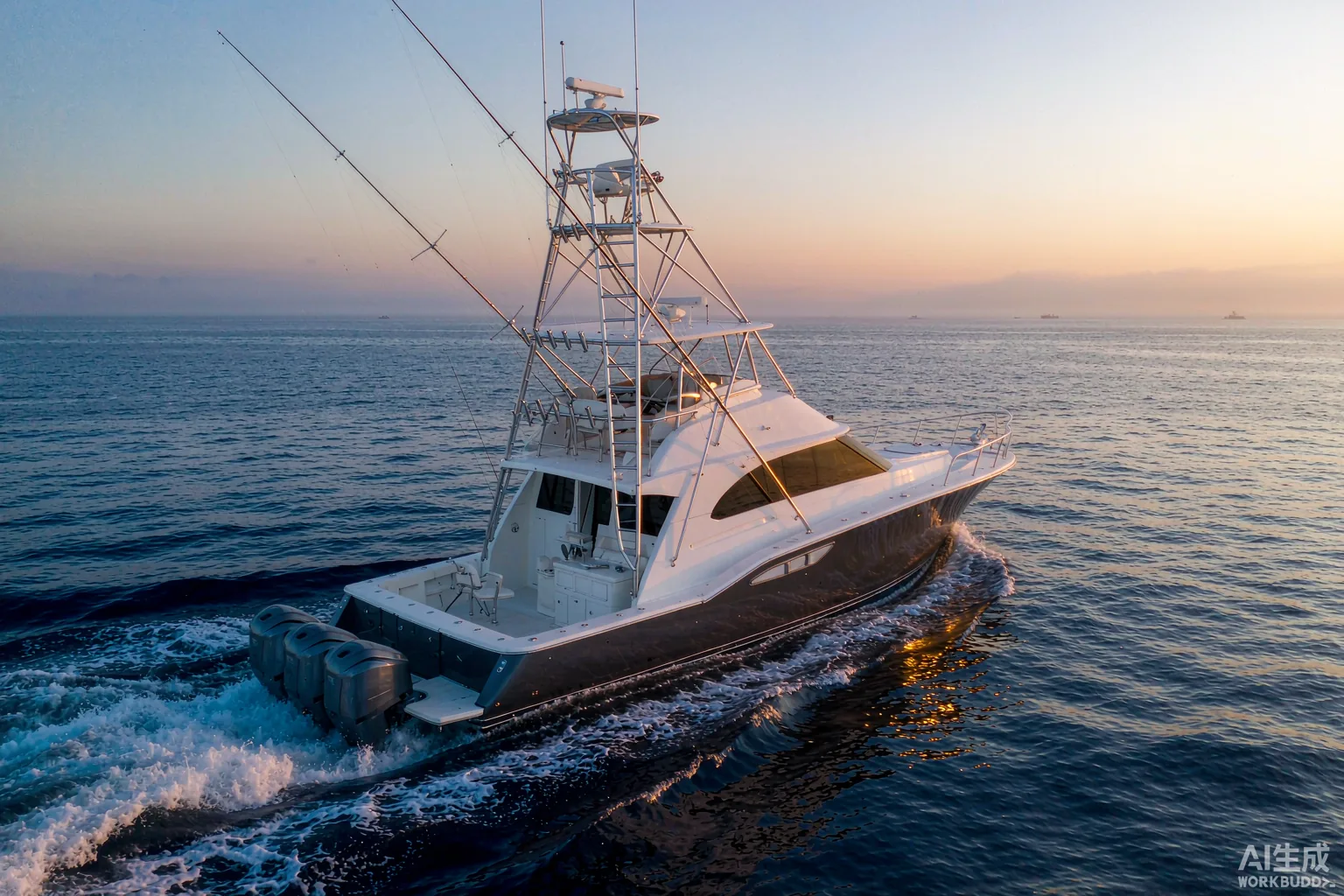
Cockpit: the part that matters most
The cockpit is where fishing boats are won or lost. Look for a deep, unobstructed working area with clear access to the transom, a proper bait prep station, insulated fish boxes large enough for the species you target, and washdown at both ends. Gunnels should be at a height that lets you lead a fish comfortably rather than fighting the boat.
Livewell capacity and plumbing deserve scrutiny: adequate volume, good circulation and easily serviced pumps. Fighting chairs, rocket launchers and rod stowage should be positioned so that lines never cross during a strike.
Sportfisher or convertible or express?
Sportfishers are purpose-built fishing machines with a tower, huge cockpit and minimal interior. Convertibles add comfortable accommodation and are the standard choice for owners who fish hard but also cruise with family. Express sportfishers put the helm aft and close to the action, at the cost of a second deck.
Centre consoles and walkarounds dominate the smaller size ranges and are the most versatile day-fishing platforms. They are also the easiest to trailer and the cheapest to run.
Riggers, gear and electronics
Outriggers, downriggers and a proper spread are what turn a boat into a fishing platform. Match rigger size to the boat and the spread you intend to pull; oversized gear on an undersized hull is all windage and no benefit.
Electronics have become the real differentiator offshore. Modern chartplotters with structure scanning, side imaging, integrated autopilot and sea-surface temperature overlays do more for strike rates than most tackle upgrades. A good transducer installation, properly placed and aligned in the hull, is worth more than the most expensive display.
Range, speed and sea-keeping
Species and grounds determine the boat. Inshore and mid-range fishing rewards a fast, economical hull with good low-speed handling. Canyon and offshore fishing demands range, a genuine heavy-weather hull and the ability to run comfortably at speed in a following sea.
Fuel capacity and burn rate are the operative numbers. Always plan fishing range with a reserve of at least a third of total capacity, and be honest about how the boat behaves loaded with full tanks, ice and a full crew.
Tenders, toys and crew logistics
For owners running a larger yacht, a dedicated fishing tender can extend capability significantly. A well-specified centre console with its own electronics makes it possible to fish shallow structure and reefs that the mother ship cannot reach, and to keep the main boat anchored and undisturbed.
Tender stowage, launch and recovery systems need as much thought as the tender itself. A tender that takes twenty minutes to launch will be used far less than one that takes five.