The maintenance rhythm: weekly, seasonal, annual
Divide maintenance by cadence and it stops being overwhelming.
- Weekly — engine room visual check for leaks and salt, bilge levels, battery voltage, sea strainers, shore power connections, and a walk of the deck for chafe and loose fittings.
- Monthly — run every system under load: generator, air conditioning, watermaker, windlass, thrusters. Exercise through-hull valves. Check fire extinguishers and alarms.
- Seasonal — full engine service (oil, filters, impellers, fuel polishing), hull and running gear inspection, rig inspection on sailboats, and a fresh-water flush of all systems before winter lay-up.
- Annual — professional survey of critical systems, antifouling and anode replacement, liferaft and EPIRB servicing, and standing rigging inspection.
Engines and mechanical systems
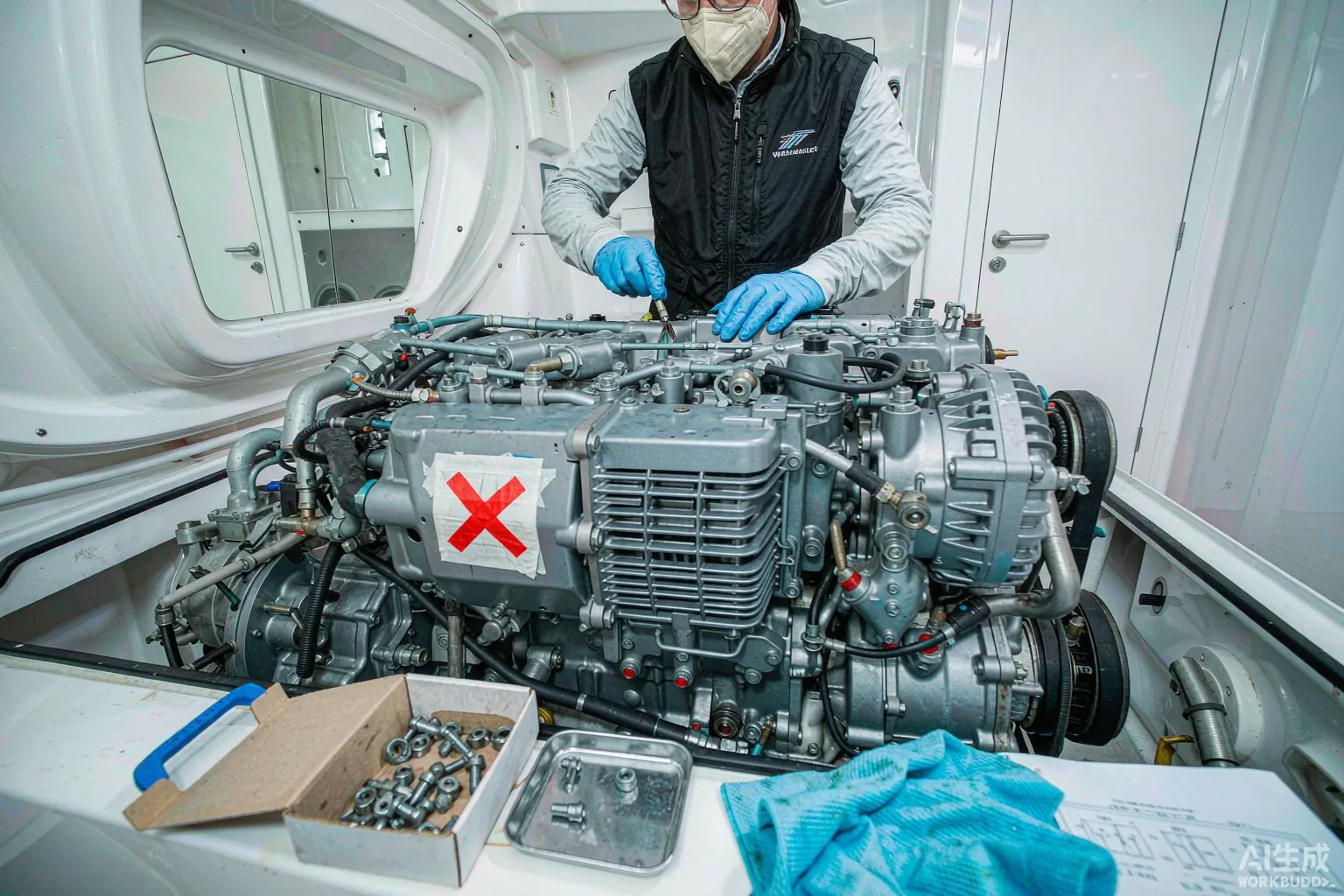
Marine diesels reward boring habits: clean fuel, clean air, correct coolant chemistry and regular oil analysis. Oil analysis is the cheapest diagnostic available and will flag wear metals long before a problem becomes audible.
Cooling systems deserve particular attention in salt water. Heat exchangers, aftercoolers and exhaust elbows corrode from the inside, and a partial blockage shows up first as a slow rise in operating temperature at high load.
Hull, running gear and antifouling
Fouling is a direct tax on fuel consumption and speed. Fresh antifouling on a clean hull can recover a meaningful share of lost efficiency, and propellers should be checked for dings and balance at the same time.
Anodes are sacrificial and must be sized and replaced on schedule; on a boat that sits in a marina with shore power connected, galvanic corrosion accelerates noticeably. Inspect anodes at every haul-out rather than once a year.
Decks, teak and exterior surfaces
Teak is durable but not indestructible. Clean it with the gentlest product that works, never a pressure washer, and keep up with caulking and bungs. Harsh chemical cleaning strips the soft grain and shortens deck life dramatically.
Gelcoat responds well to regular polishing and wax; stainless steel needs periodic passivation and rinsing to hold off rust bloom. Small cosmetic jobs done early are far cheaper than refinishing later.
Systems that punish neglect
Watermakers, air conditioning and refrigeration all rely on seawater and electricity, which is an unforgiving combination. Flush and pickle systems before long lay-ups, keep strainers clean, and run equipment regularly even when you are not aboard — idle machinery fails faster than used machinery.
Batteries are the other quiet failure point. A degraded bank shows up as unexplained low voltage and strained charging, and by then the cells are usually beyond recovery.
Budgeting maintenance realistically
A common planning figure is 3–5% of vessel value per year for routine maintenance alone, separate from berthing, insurance and fuel. That budget covers scheduled servicing and small failures; it does not cover refits, new electronics or unexpected major repairs.
The single best cost-control measure is a written log. Equipment history, part numbers, service intervals and receipts turn maintenance from guesswork into a plan — and it is exactly what a buyer will ask to see when you sell.